Does Oral Collagen Actually Work? What The Research Shows
Oral collagen supplementation is one of the more heavily researched trends in the beauty-supplement space, with a genuinely reasonable evidence base behind it.
Understanding what the research actually found, and its limits, helps set realistic expectations.
The basic theory
Collagen is the most abundant structural protein in skin, providing firmness and elasticity. Natural collagen production slows with age. The theory behind oral collagen peptides is that consuming broken-down collagen provides amino acid building blocks and may signal the body to increase its own collagen production.
What the clinical research shows
Why this evidence is genuinely stronger than most
Unlike many trending skincare ingredients, oral collagen has multiple double-blind, placebo-controlled human trials behind it specifically for skin outcomes, not just cell-culture or animal research. This puts it in a stronger evidentiary position than most botanical additions common in this category.
Where the evidence has limits
Studies vary in the specific collagen peptide type, dose and duration used, and results are measured in millimeters of elasticity change rather than dramatic visible transformation. Results also build gradually over 8 or more weeks, not overnight, and individual response varies.
What it does not support
Oral collagen does not eliminate deep wrinkles, does not treat diagnosed skin conditions, and does not replace the foundational role of sun protection and a good topical routine.
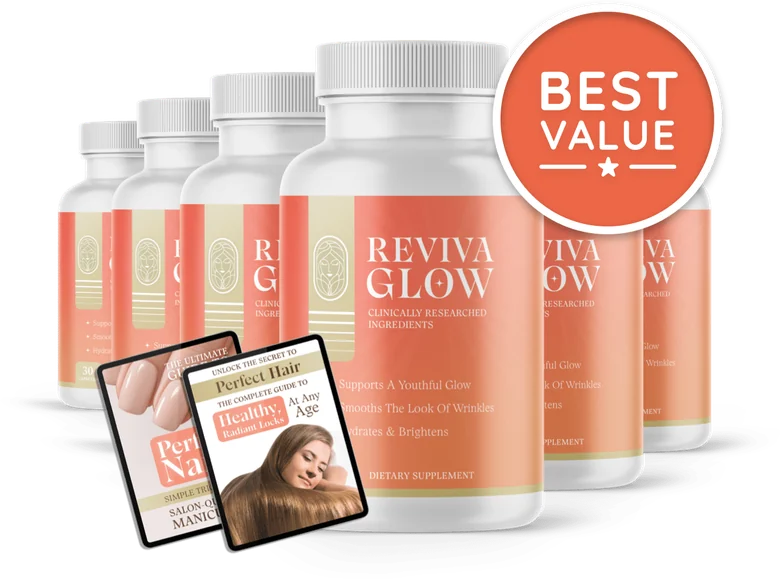
Applying this to RevivaGlow
Collagen Peptides anchor RevivaGlow's formula, chosen for this comparatively strong research base among beauty-supplement ingredients. The realistic framing is a genuinely useful complementary ingredient, not a replacement for sunscreen or topical skincare.